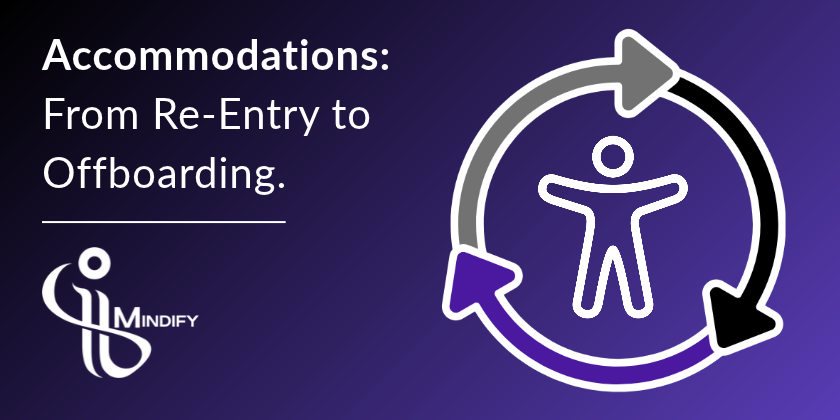
From Re-Entry to Offboarding: How to Build Sustainable Systems for Workplace Accommodations
Workplace accommodations are perceived to be for workers with limitations. Discard the assumption that workplace support is restricted to crisis and medical interventions. Good accessibility is not just about helping one person in times of adversity; it’s about taking care of both the person and the whole team together. This means having a system that supports people through big career moves, life milestones, and health needs alike.
Even positive organizational milestones, such as an employee returning from an extended career break, require deliberate management. Take, for example, an employee returning from an extended career break. Expecting someone to step back into a transformed environment without a formally structured ramp-up period is unfair to the employee, the team, and the business.
Forward-thinking organizations remove the psychosocial hazards related to re-entry by building systematic support directly into their core business model. Here are three ways to accommodate re-entry:
Design a predictable, gradual re-integration schedule that phases out administrative catch-up and focuses first on context-sharing before task execution. It protects the returning employee from the overwhelming anxiety of immediate performance pressure, giving them a safe runway to absorb environmental changes without burning out. At the same time, it safeguards team efficiency and workflow stability; instead of colleagues picking up the pieces of a rushed return, a structured ramp-up ensures clear expectations and keeps the entire unit running smoothly.
Create a standardized “what you missed” briefing package detailing major software updates, policy shifts, and team restructuring during the absence. It removes the burden of inquiry for the returning employee, sparing them from hunting down fragmented updates from colleagues or feeling awkward about asking what changed.
Pair returning employees with a peer mentor outside of direct line management for their first 30 days. It provides the returning employee with a low-stakes sounding board for operational questions, preventing small friction points from turning into major setbacks.
Offboarding procedures, specifically exit interviews and anonymous exit surveys, are one of the most underutilized data sources for evaluating accessibility and operational gaps. When employees leave, they are often candid about the silent barriers they faced during their tenure.
Embed explicit questions about accessibility, hidden friction points, and support gaps into your exit interview templates and surveys. Gathering data on accommodations during offboarding allows you to audit your systems and identify blind spots without fear of internal bias. It turns every departure into an actionable opportunity to build a stronger, more accessible workplace, protecting both future hires and the remaining team from repeating the same silent struggles.
Accessibility is a dynamic operational system, not a static policy. When you process feedback through a continuous cycle like the Plan-Do-Check-Act (PDCA) Model, your environment naturally adapts, eventually making individual accommodation requests a rare exception.
As a licensed provider of the Mental Health Commission of Canada’s Opening Minds Psychological Health and Safety programs, iMindify trains and consults workplaces on exactly how to operationalize this type of framework.
A truly accommodating workplace doesn’t rely on frantic, reactive scrambling whenever someone needs help. Whether an applicant is booking their interview, an employee is navigating a major career transition, or a departing team member is sharing feedback on their way out, the philosophy remains the same: support must be built directly into the foundation.
If you missed the beginning of this three-part series, check out Redefining Workplace Accommodation as Operational Design to explore why reactive support drives burnout and how to build structural safety into your foundational framework.
iMindify is an IWSCC Certified Supplier. You can visit their website here.
Start your Workplace PHS journey today when you register for iMindify’s next intro workshop.